An AI coach that keeps an author's teaching working after the workshop
Written by Shahzaib Shoaib, founder and lead engineer
We built the full ResultPal platform for author Dr. Pelè. He sells it to organizations. Its AI coach helps people use his teaching, and leaders see follow-through without reading anyone's chat. It was in production in about three months.
- ~3 mo
- From first commit to production
- 5
- Roles, from participant to executive
- Client
- ResultPal · Dr. Pelè
- Our role
- Lead developer: technical architecture, engineering and implementation
- Industry
- Coaching · Corporate Training
- Region
- United States
- Services
- AI CoachFull-stack PlatformMVP
- Timeline
- About three months to production, from June 2026
- Year
- 2026
Good training, then back to the inbox
A workshop can go well and still change very little. People leave with a page of notes and real intentions. Back at their desks, the week fills up, and the ideas fade before they ever turn into habits. Authors and coaching companies know this better than anyone, because it is the part of the result they never get to see.
Dr. Pelè writes and teaches about exactly that gap, the distance between knowing something and doing it. He wanted his teaching to keep working on people in the weeks after the room empties. He also wanted the organizations paying for it to see whether it did.
We built the full ResultPal platform for author Dr. Pelè. He sells it to organizations. Its AI coach helps people use his teaching. It was in production about three months after the first commit, and it now ships improvements on a weekly rhythm.
The methodology, the product vision and the detailed functional specifications are Dr. Pelè's. We led the technical architecture, engineering and implementation that turned them into a working platform.
The project is under NDA, so this page sticks to what the product does and what each person gets out of it. How it works inside stays private.
A coach that comes back and asks
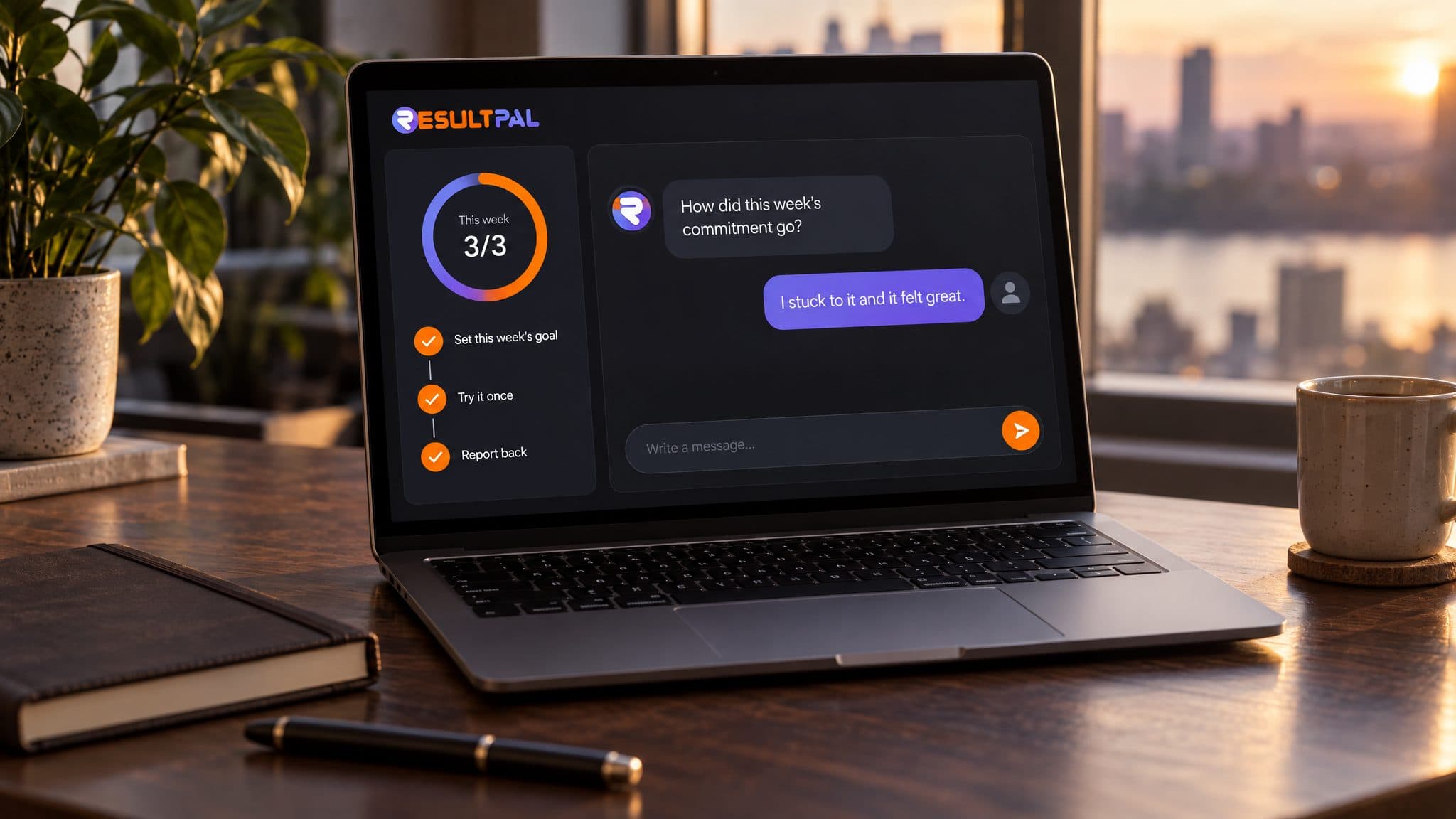
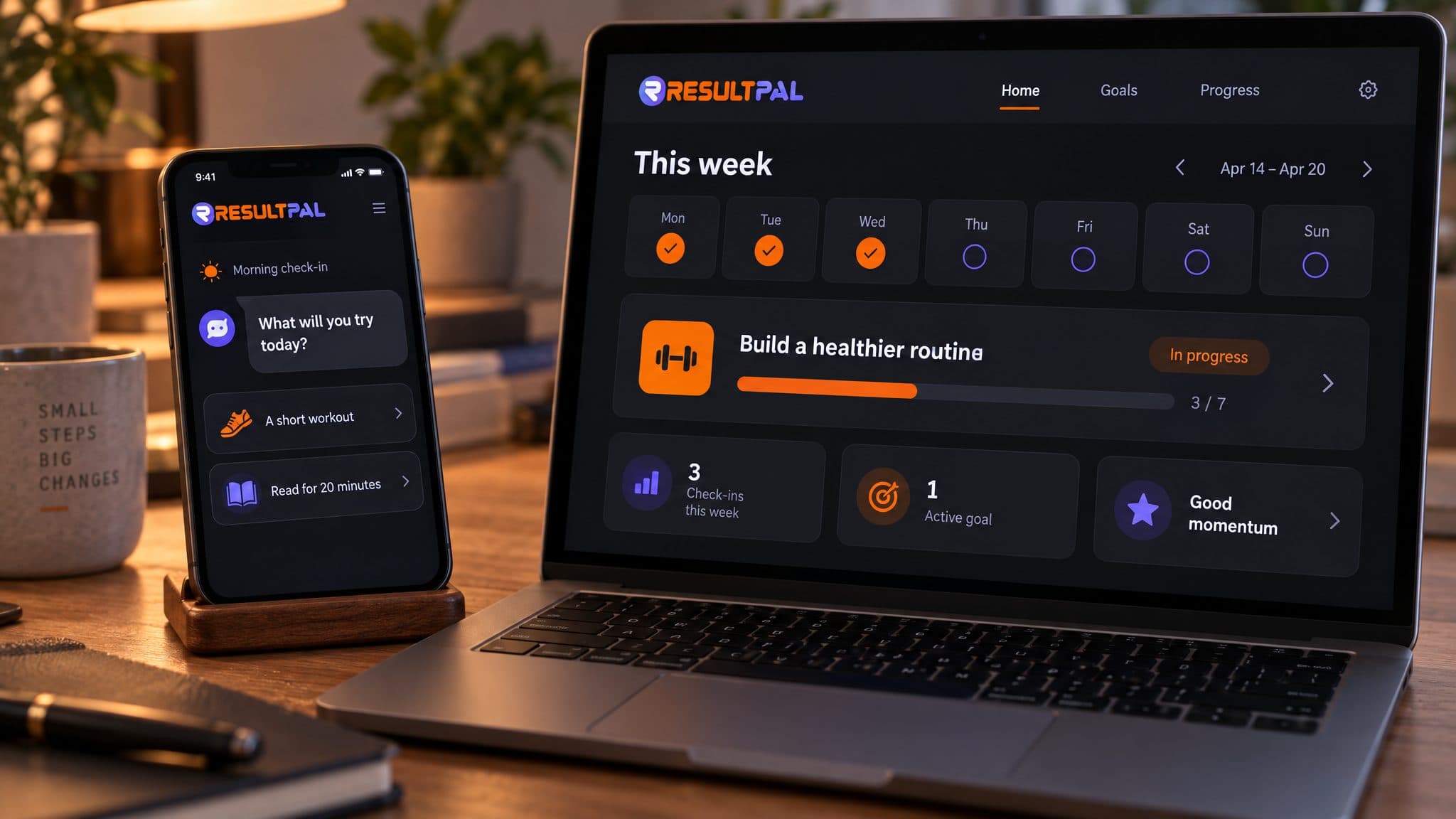
A participant signs in and finds a coach waiting in a chat window. It checks in and helps them choose one thing to do this week, something small and concrete enough that they will know in a few days whether it happened. A goal for the week is easier to keep than a resolution for the quarter, and it gives the coach something real to ask about later.
Then it comes back. At the next check-in the coach asks about that goal. If it got done, they build on it. If it only partly happened, or not at all, the coach asks what got in the way, and the next goal is set with that obstacle in mind. This is the part most people skip when nobody is asking, and it is where the habit actually forms.
It also sounds like him. The coach works from Dr. Pelè's method and the program material for that group, so what people hear is his teaching in his style. A generic chatbot gives generic advice, and people can tell within a couple of messages.
And it remembers. A commitment made weeks ago can come back up when it is relevant, so nobody has to explain their situation from the start.
Patterns across a team, without reading anyone's chat
A team leader wants to know whether the training is sticking with their people. The obvious way would be to read the coaching conversations, and that would ruin them. Nobody tells a coach the truth about a hard week if they think their manager is reading along.
So leaders never see the chats. Their view shows follow-through, meaning how often the goals people set actually got done, broken down by the behaviors the program is trying to build. It also shows themes, such as the obstacles that keep coming up, pooled and anonymized.
The privacy rule is simple enough to explain to a whole team in one sentence. Individual conversations stay private, and leaders only ever see patterns once a minimum group size has shared, never one person's words. When a group is too small, the screen says so plainly. That rule is a big part of why people are honest with the coach, and honest answers are the only ones worth reporting on.
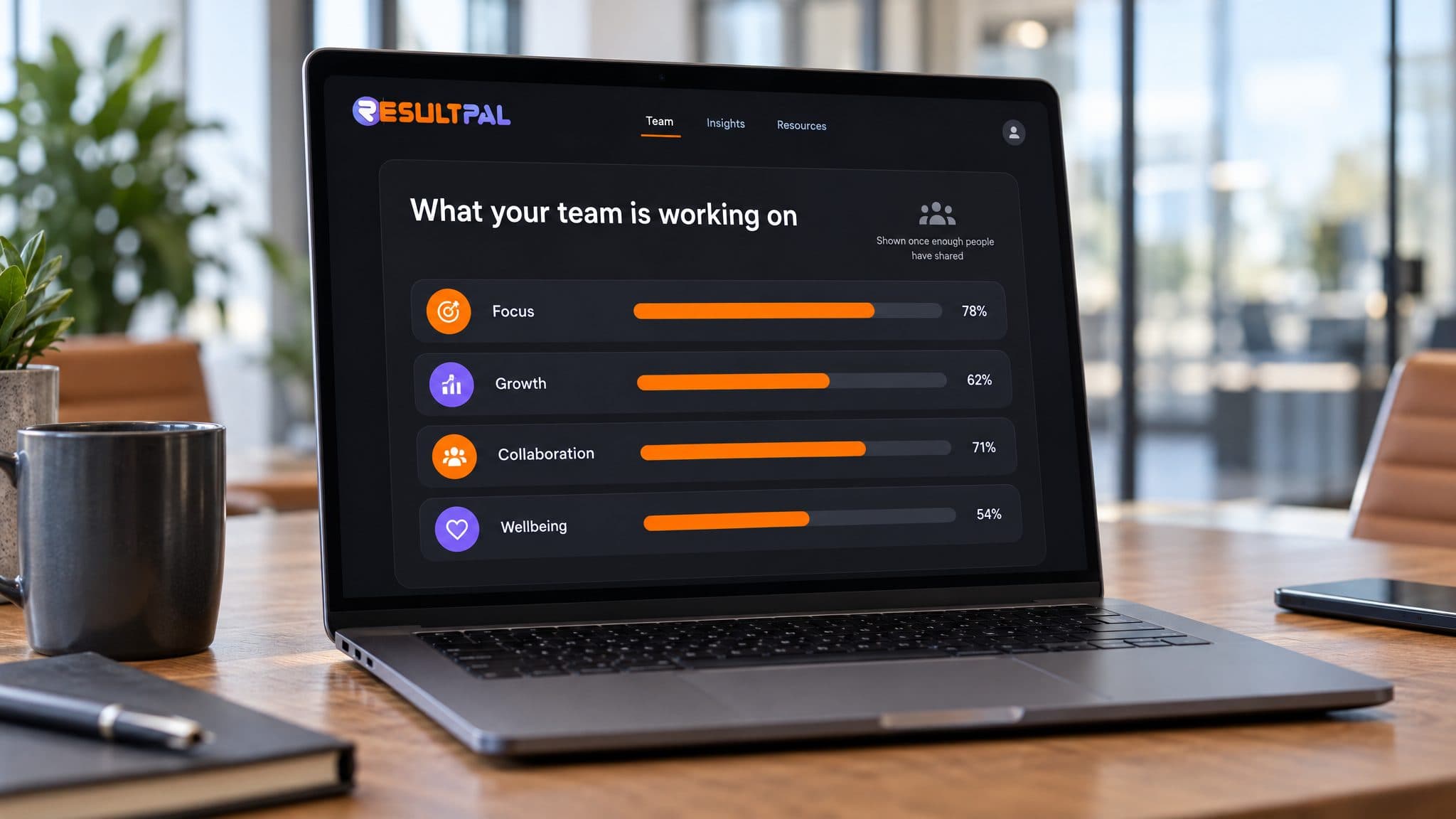
Nobody tells a coach the truth about a hard week if they think their manager is reading, so leaders only ever see patterns.
Is the training turning into results
An executive asks a bigger question. They paid for a program, maybe several, running across different teams with different start dates. They want to know whether any of it is changing how people work.
Their view rolls the same signals up across cohorts. They can see where follow-through is strong and where it is slipping, compare one group with another, and spot the obstacles that show up again and again across the business. The same privacy rule holds at this level. More data means more patterns, never more access to any one person.
For Dr. Pelè, this is the report he can put in front of a client after the workshop is over. Training is usually sold on trust. This lets him sell it on what people did afterwards.
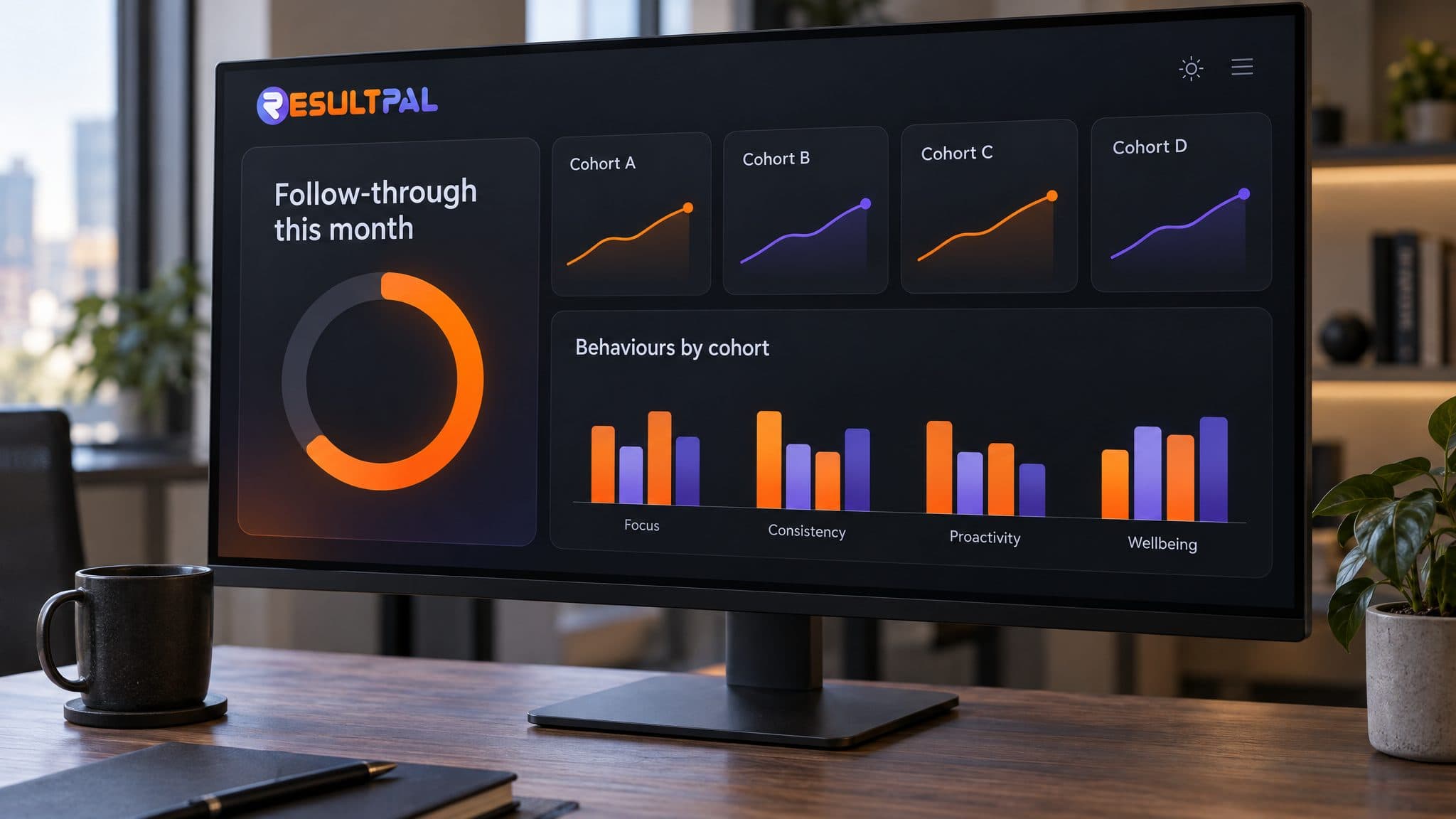
Run by the author and sold with his teaching
Dr. Pelè runs the platform himself. When he signs a new organization, he sets it up and creates its cohorts on his own, then uploads the program material the coach will draw on for that group. He does not need to call us to onboard a client.
Two organizations can run different programs on the same platform, and each coach stays with the material approved for its own group. When Dr. Pelè revises a program, he uploads the new material and the coach works from that.
Everyone who uses it has one of five fixed roles, and each role sees only the part of the product meant for it.
That setup is what lets him sell ResultPal alongside his teaching. An organization buys the training and the weeks of coaching after it as one package, and at the end he can show them what changed.
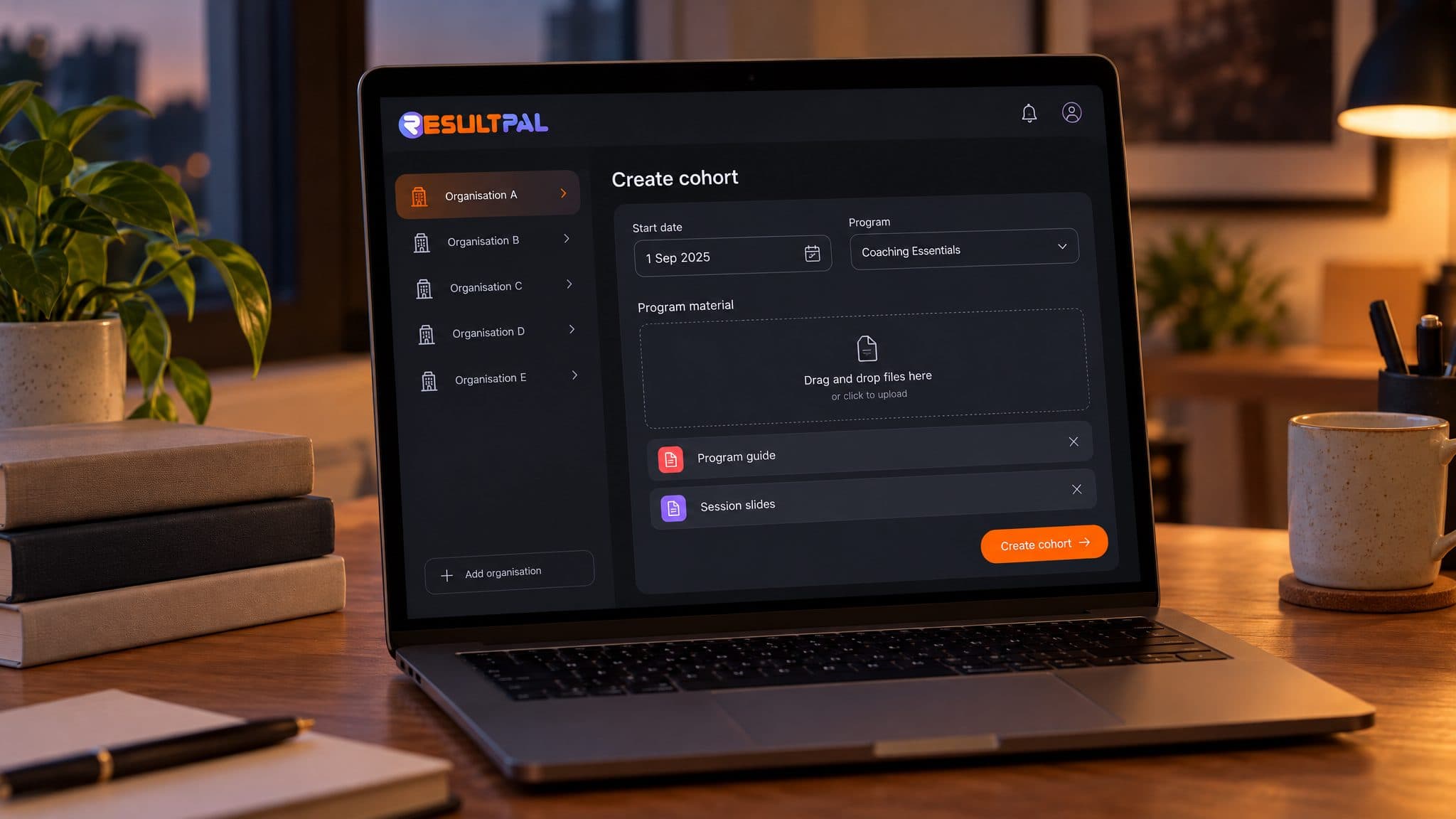
His method and vision, our engineering
ResultPal is Dr. Pelè's product, and the split of work was clear from the start. He brought his proprietary methodology, the product vision and detailed functional specifications. We brought the technical architecture, the engineering decisions and the implementation.
He knew in detail what the product had to do for each person who would use it, from a participant on their first check-in to an executive comparing cohorts. That let us spend our time on building it well.
Dr. Pelè reviews in detail. The product went through structured feedback rounds where he sent written changes, then checked our work against them one by one.
In production, with a weekly rhythm
ResultPal was in production about three months after the first commit.
Since then it has shipped improvements on a weekly rhythm, and every change is rehearsed before it reaches customers. People use this product over weeks, so a bad release would land in the middle of someone's program. We treat each one with that in mind.
Today Dr. Pelè runs ResultPal himself and sells it to organizations alongside his teaching, and a new round of improvements goes out each week.
“Zaibex helped us transform ResultPal from a product concept into a fully functioning AI-powered SaaS platform in approximately three months, successfully meeting our original development and launch milestone.”
If you sell training, the result your clients care about happens after the room empties. ResultPal keeps the author's method in front of people each week and asks whether they followed through, while leaders see the pattern without anyone's words exposed. It works because the method and the vision came first: Dr. Pelè brought both, in detail, and our job was to turn them into software people use every week.