Between-session AI coach for coaches and course creators - The work happens between your calls. Now you can see it.
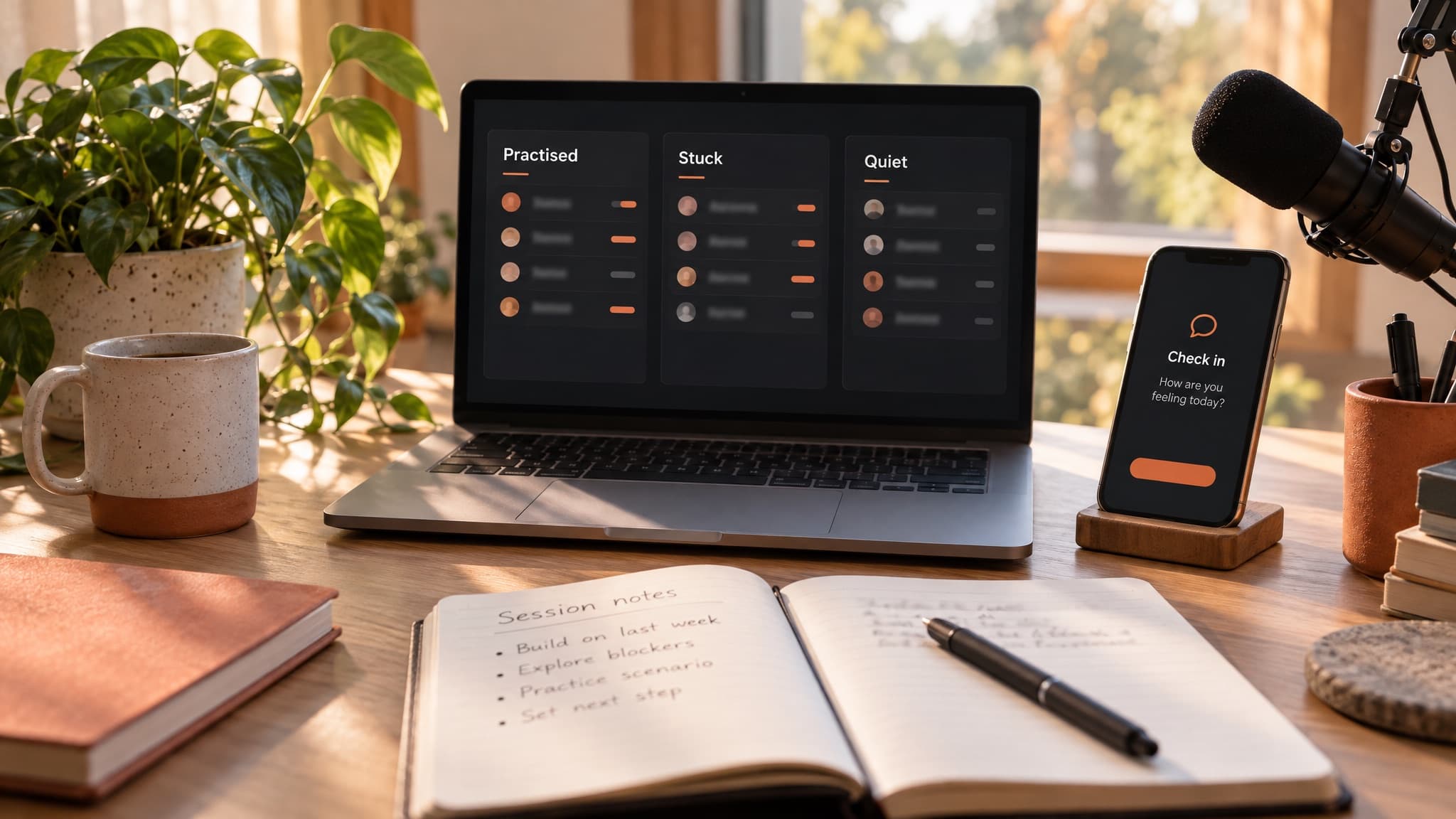
Zaibex builds Between-Session AI Coaches, a type of AI practice coach, for coaches with a proven method and for course creators. It runs your exercises and check-ins on the days you choose, answers only from your approved material and sends anything else to you. On Friday you see who did the work, who is stuck and who went quiet. It sits next to Kajabi, Circle or Skool. A first version takes about two weeks, most builds are live in four to six, and you own the code and data.
Your clients nod on Tuesday's call and go quiet until next Tuesday. Your people buy the course and stall in module two. We build a coach on your method that checks in on the days you pick, runs your exercises, and answers in your words from material you approved. You keep Kajabi, Circle or Skool. You just stop guessing who is doing the work.
The problems this is built for.
Common problems coaching owners describe. Not client quotes, and no one here is a named client.
Hover to pause
“Clients don't do the work between sessions.”
“I'm answering Voxers at 9pm on a Sunday.”
“They buy the course and never finish it.”
“The community is a ghost town.”
“I answer the same five questions every week.”
“They graduate and I never hear from them again.”
The moments where clients drift, and what the coach does there.
Every line in your build comes from your program. These are the moments we design for first, because they are where clients quietly stop.
The Monday check-in
The client committed to one action on last week's call. Monday morning, the coach asks how it went, before the week swallows it.
What your client says- “I didn't get to it. Work was insane.”
- “I did half of it.”
- “Honestly I forgot what we agreed.”
What the coach checks- Did they name the action they committed to
- Did they set one smaller step for this week
- Did they flag a blocker your rubric says needs you
They buy the course and never finish it
Someone finished module one ten days ago and has not opened module two. The coach sends one exercise from module two, small enough to finish in ten minutes.
What your client says- “I'll get back to it next week.”
- “I'm not sure I'm doing it right.”
- “This part feels too basic for me.”
What the coach checks- Did they complete the exercise in your format
- Does their answer show the idea from the lesson
- Should a human reach out before they ask for a refund
How do I stop answering the same questions?
The question you have answered in every cohort since you started. The coach answers it from your material, in your words, and links the lesson where you teach it. If you are answering Voxers at 9pm on a Sunday, this is where that time comes back.
What your client says- “How do I price my first offer?”
- “What do I post this week?”
- “Is it normal to feel stuck at this stage?”
What the coach checks- Answered only from your approved material
- Pointed to the exact lesson
- Sent to you when your material doesn't cover it
How do I keep clients after the program ends?
The program ends Friday. The coach asks what they want next, captures the answer, and puts the ones who are ready on your list for the next program.
What your client says- “I think I'm good for now.”
- “Maybe later in the year.”
- “What would the next step even look like?”
What the coach checks- Did they name a result they got
- Did they say what they still want
- Ready for your next program, or not yet
What your client does, and what you do.
A week for one of your clients, as you would run it. The right-hand column is the point: most days ask nothing of you.

- 01MondayYour client
A message at 8am in your words: "Last week you said you would send three offers. How many went out?" Your client replies "one" and gets a five-minute exercise from your module on follow-up.
YouNothing. You set this check-in up once, from your program.
- 02TuesdayYour client
Asks the pricing question you've answered forty times. Gets your answer, from your lesson, with a link to the exact video.
YouNothing. The coach answered from your material, and the question shows up in your weekly summary.
- 03WednesdayYour client
Asks something your material doesn't cover. The coach says so plainly and sends it to you instead of guessing.
YouYou answer it once in the review screen. Everyone who asks after this gets your answer.
- 04ThursdayYour client
Someone who stalled in module two gets one small exercise from it, and finishes it on the bus.
YouYou message the two clients the coach flagged as quiet, while it is still a nudge.
- 05FridayYour client
Gets a short recap of the week and one focus for next week.
YouYou read the Friday list: who did the work, who is stuck, who is ready for your next program. Your next group call starts where the room is stuck.
Your method, running on the days you are not on a call.
We build from your exercises, your lessons and the answers you already give. It runs next to the platform you have, so nobody moves their course.
- 01
Check-ins and exercises from your method, on the days and times you choose
- 02
Answers only from your approved lessons and notes, with a link to the lesson
- 03
Questions it can't answer go to you or your team, and your answer is reused after that
- 04
A nudge to clients who go quiet, and a flag to you if they stay quiet
- 05
The Friday list: who did the work, who is stuck, who went quiet, who is ready for your next program
- 06
Text by default, and a standard AI voice when your method is spoken. It always says it is an AI, and we don't copy your voice
- 07
A login under your brand, sold as part of your program or as a paid add-on
- Kajabi (public API on Pro, webhooks on Growth and Pro)
- Circle (Admin API on Business and up)
- Skool (Zapier triggers only)
- Teachable
- Thinkific
- GoHighLevel
- Kit
- Zapier
- Stripe
Where coaching ends and something else begins.
Coaching has no single license, but your clients will still bring the coach things that are not coaching. These are the lines we build in and test before launch.
- Crisis and therapy lines988 Suicide & Crisis LifelineWhat it means for a script
Clients tell a coach things they would not tell a form. Some of it is a crisis, and a coaching tool must not try to handle it.
What the coach doesIf someone mentions self-harm, abuse or a crisis, the coach stops coaching, shows the 988 Suicide & Crisis Lifeline and alerts you or your team.
- Saying it is an AICalifornia Business and Professions Code 17941What it means for a script
California makes it unlawful to use a bot that hides being a bot to push a sale. Hiding it would also break the trust you sell on.
What the coach doesThe coach says it is an AI coach trained on your material, in its first message and whenever asked. It never signs off as you.
- Results and income claimsFTC Endorsement Guides, 16 CFR Part 255What it means for a script
The FTC Endorsement Guides apply to testimonials and results claims in your marketing. A coach that promises outcomes speaks for your business.
What the coach doesThe coach never promises a result, an income or a timeline. It talks about the work, and your approved claims stay on your sales page.
- Client dataOpenAI API: your dataWhat it means for a script
Clients share their business, health or family details. You need to know where that goes and who can read it.
What the coach doesData stays in accounts in your name. We use AI provider APIs that don't train on your data by default, and each coach on your team sees only their own clients.
This is how we build, not legal advice. Your counsel or compliance team signs off on the scripts before launch.
Work this is built on.
“As a founder with a clear product vision but without a software engineering background, I especially appreciated his ability to translate my ideas and detailed specifications into practical, elegant technical solutions.”
 01AI Coach · Training
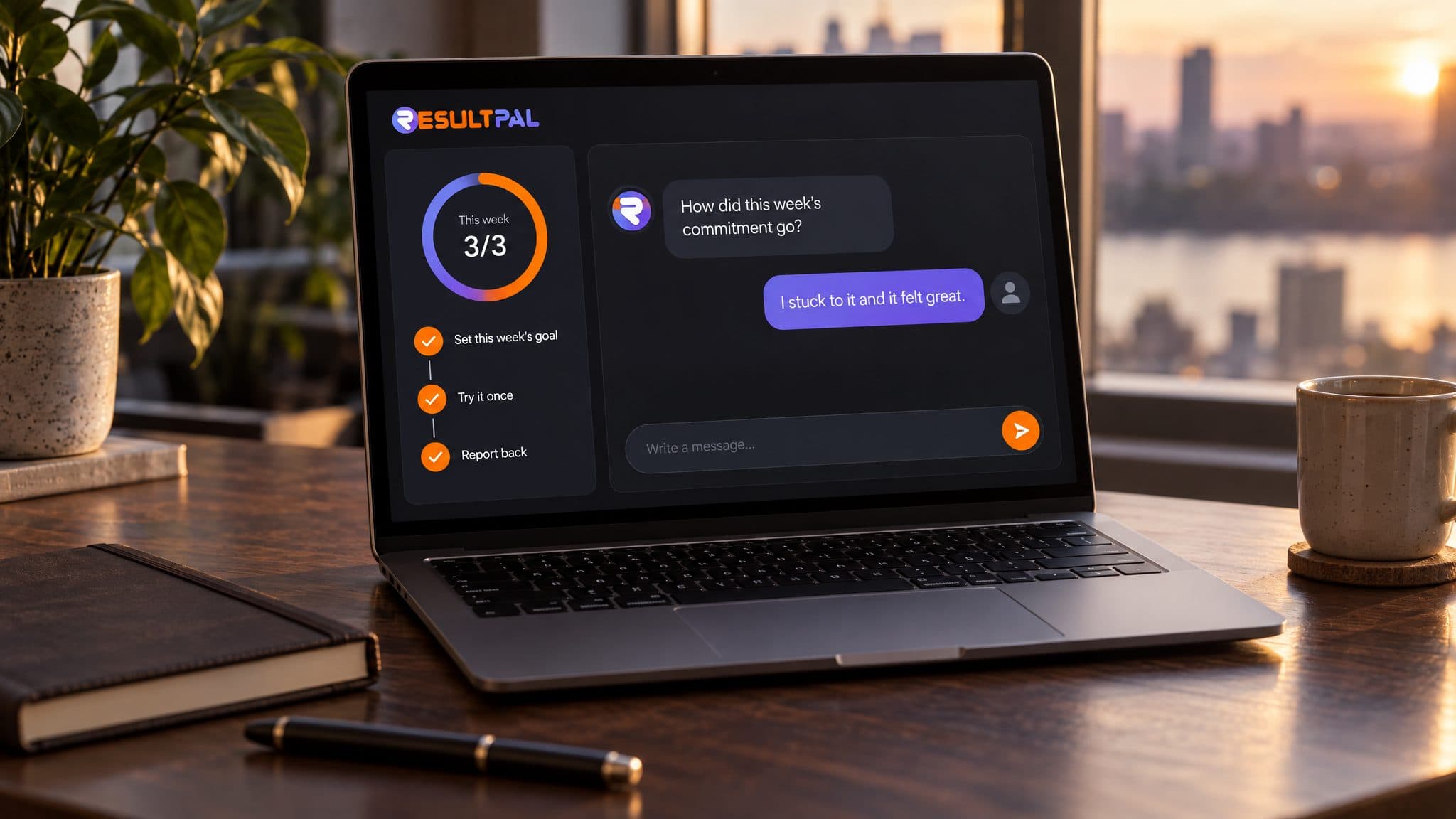
An AI coach that keeps an author's teaching working after the workshop
We built the full ResultPal platform for author Dr. Pelè. He sells it to organizations. Its AI coach helps people use his teaching. It was in production in about three months.
ResultPal · Dr. Pelè 02Workshop Exercise · Five Whys
A timed workshop exercise app where the AI decides when to stop asking why
A timed exercise app where an AI asks up to five follow-up questions on each answer, and every session ends in an emailed analysis built from the person's own words. The same pattern turns a worksheet in your course into an exercise people finish.
Australian SME AI program 03Lead Capture · Events
A QR code app that emails each event attendee a personal AI plan
A QR code app for events. Attendees fill in a short form and get personal AI picks and a one-page PDF by email. A Client Assessment Quiz for your audience is built the same way.
Australian SME AI program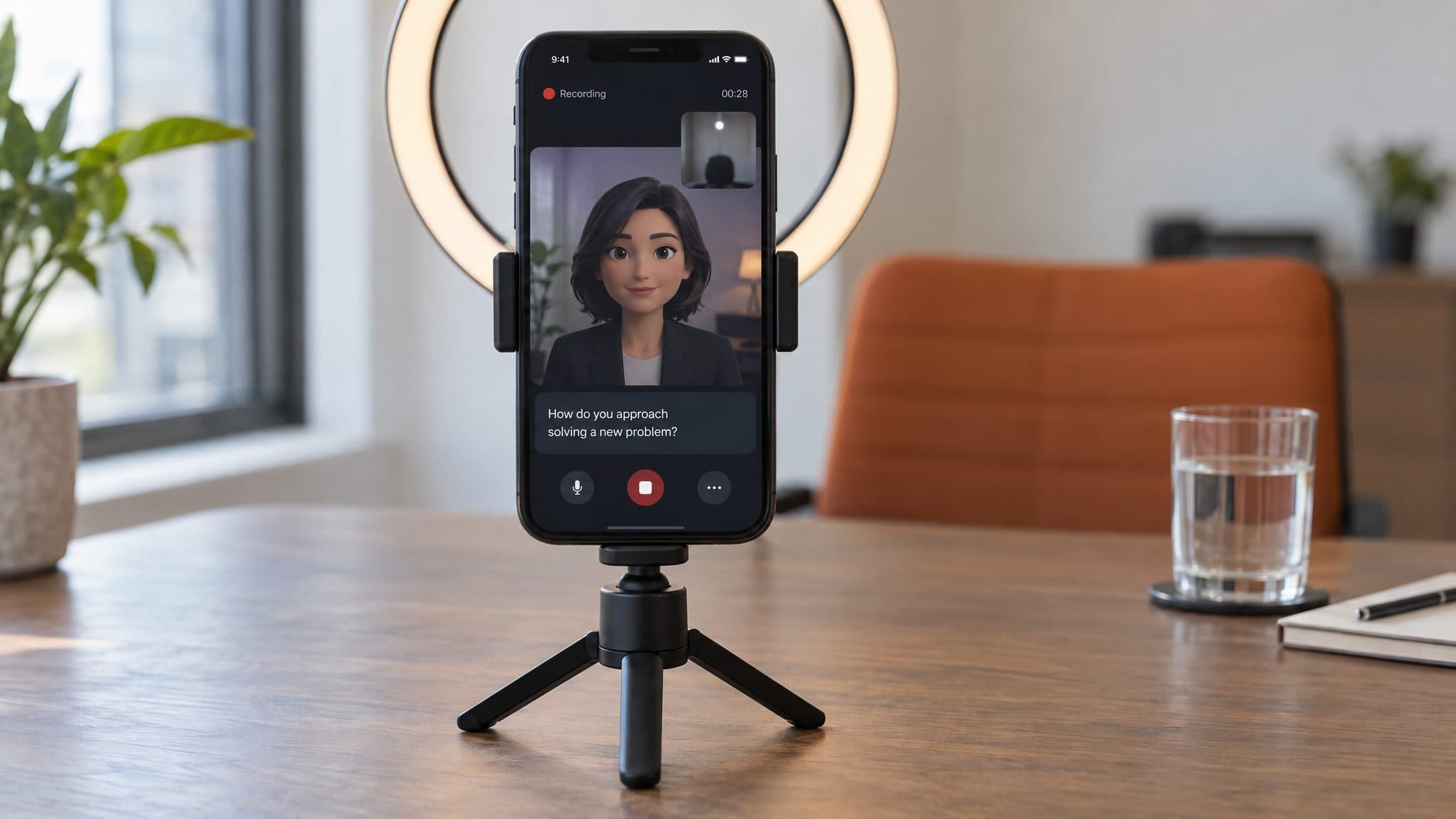 04AI Avatar · Testimonials
An AI avatar that interviews participants and cuts each recording into one video
An avatar that interviews participants in the browser and asks one follow-up when an answer is vague. The graduation-week check-in uses the same idea: one good follow-up question, asked every time.
Australian SME AI program
What else is on the market.
The tools a coaching business would compare us against, checked on the date shown. Where a vendor publishes nothing, the table says so.
You own the code and the data from day one, it runs in accounts in your name, and your course stays on the platform you already pay for.
Lines your coach will never cross
Each line is a rule in the build, with a test behind it, before the first client signs in.
- 01
Act as a therapist. A crisis goes to the 988 Lifeline and to you, straight away.
- 02
Pretend to be you. It says it is an AI coach trained on your material.
- 03
Guess. If the answer isn't in your material, it says so and sends the question to you.
- 04
Promise a result, an income or a timeline.
- 05
Give medical, legal or tax advice, even when your niche sits close to it.
- 06
Show one client's answers to another client, or to a coach who doesn't work with them.
- 07
Keep messaging someone who asked it to stop.
Things coaches ask before they book.
Updated
Does it work with Skool?
Yes, with a link rather than a deep connection. Skool has no public API that we could find. Its Zapier integration offers a few triggers, such as a new paid member, and actions such as unlocking a course. So the coach lives at its own address under your brand, with a link from your Skool classroom, and a new paid member in Skool can get access automatically.
What about Kajabi, Circle, Teachable or Thinkific?
Kajabi's public API comes with its current Pro plan, and webhooks come with Growth and Pro, so on those plans we can tie access to a purchase. Circle's Admin API starts on its Business plan. Teachable and Thinkific work through a link and a shared login or Zapier. Every connection is confirmed in your one-page plan before you pay anything.
My community is a ghost town. Will clients actually use this?
A quiet community usually means people have no small next step. The coach gives them one. Some will use it and some won't, the same as homework today. The research is on the side of asking, though. A 2016 review of 138 studies in Psychological Bulletin found that prompting people to track their progress helped them reach their goals, and it helped more when progress was written down or reported to someone. A check-in on Monday is that prompt. The Friday list shows who ignored it, so a person can step in.
People buy my course but don’t finish it. How can AI help?
By catching the stall early and making the next step small. When someone has not opened the next module in about ten days, the coach sends one exercise from it, small enough to finish in ten minutes. It answers their questions from your lessons and links the exact video. If they stay quiet, you get a flag before they ask for a refund. The problem is real: for free courses, completion is very low. An MIT and Harvard study of edX courses found that 3.13% of all participants completed in 2017 to 2018, and the rate had not improved in six years. Among learners who paid for a verified certificate it was 46%. Paid programs do better, but even half your buyers stalling is a lot of refunds and very few testimonials.
Sources: Reich and Ruipérez-Valiente, "The MOOC pivot", Science (2019)
Can you build an AI version of me that clients talk to between sessions?
Yes, with one difference. It answers in your words, from material you approved, and runs your exercises and check-ins between sessions. It says it is an AI trained on your material and never signs off as you. It uses a standard AI voice, not a copy of yours. If you only want a chatbot that answers as you, Coachvox or Delphi costs less.
Should I leave Kajabi and build my own platform?
Usually not, at least not first. Your course stays on Kajabi and the coach runs next to it. Kajabi's public API comes with its Pro plan and webhooks with Growth and Pro, so access can follow a purchase. If you later want your own portal and app, we quote that as its own fixed-scope build.
Will it sound like me?
It should read like you, because it only uses your words. The coach answers from material you approved, and you run test conversations and correct it before any client sees it. It uses a standard AI voice and always says it is an AI. We don't copy your voice.
Does it work for group programs as well as one-to-one?
Yes. In a group program, the Friday list matters more, because you can't watch 40 people at once. It also shows which question or exercise the whole group is stuck on, so your next group call starts there.
What does it cost?
After a free call and a free audit, you get one fixed quote in writing, on a one-page plan. We don't publish a number because scope varies a lot. A scored quiz is a small job, and a coach with several programs, voice and a team dashboard is a bigger one. You pay 50% to start and 50% at launch. Hosting and AI accounts are in your name, so the running cost is the provider’s bill, which grows with use, not headcount. No seat fees and no revenue share.
Who owns it, and who sees my clients' data?
You own the code and the data. Hosting, database and AI accounts are in your name, and client data stays there. You decide which of your coaches see which clients. If you stop working with us, the coach keeps running, and the code is written up so another developer could take it over.

Start with a free call.
Tell us how you coach and where your people get stuck. Then a free audit: we look at your method and the tools you already run, and tell you what we would build first, or whether an off-the-shelf tool already does the job. You get one fixed quote in writing.
Free call · free audit · one fixed quote in writing
- 01Book a free callTell us how you coach and where your people get stuck.
- 02Get a free auditWe look at your method and the tools you already use.
- 03DecideA fixed quote in writing. Nothing to pay if you say no.