Book companion app for authors and speakers - Readers finish the book. Then they do what it says.
Zaibex builds book companion apps, an AI practice coach for readers, and post-talk follow-up for nonfiction authors and speakers. Readers get your exercises as short daily prompts, a journal and a personal plan, and they practice your method with answers only from your book that cite the page. Audiences score themselves on your framework and leave their email with you. A first version takes about two weeks, and most builds are live in four to six. You own the code, the data and the reader list.
Most readers close a good book meaning to try the exercises, and never do. Most audiences leave a keynote fired up and forget it by Friday. We turn your chapters and your framework into short practice people do in the weeks after, in your words. The ones who do the work find their way to your coaching, your course or your next event.
The problems this is built for.
Common problems authors and speakers describe. Not client quotes, and no one here is a named client.
Hover to pause
“Readers love the book. I have no idea who they are.”
“They finish, celebrate, then disappear.”
“The exercises are the point, and most readers skip them.”
“The room is fired up for an hour, then it fades.”
“I don't want a robot pretending to be me.”
Where a reader or an audience member stops, and what happens instead.
Every prompt comes from your book or your talk. These are the moments we design for first.
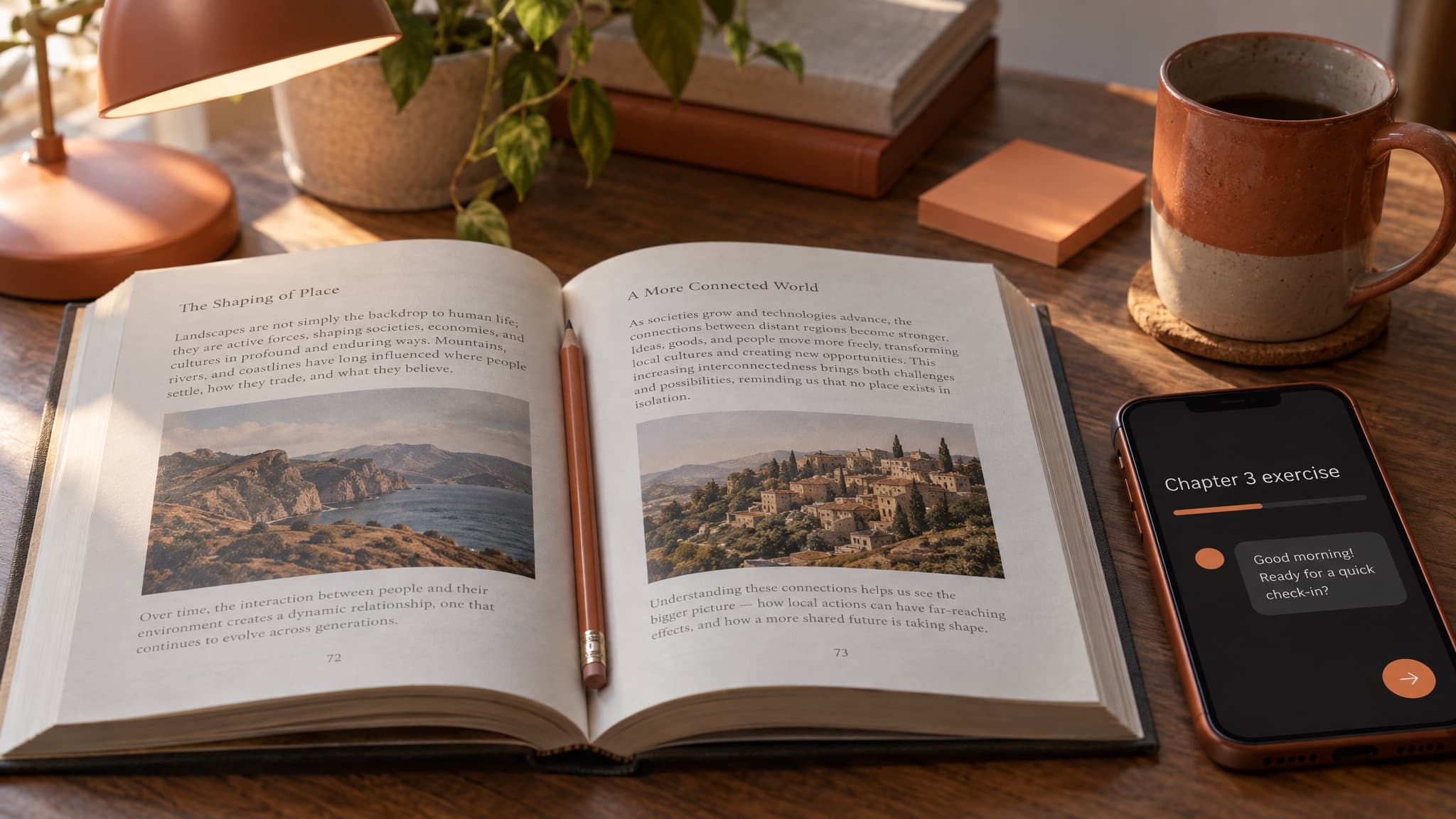
The chapter exercise
Chapter 3 ends with an exercise most readers skip. The app sends it the morning after they finish the chapter, cut down to five minutes.
What your reader says- “I'll do the exercises on a second read.”
- “I got the idea, I do not need to write it down.”
- “Which page was that exercise on?”
What the app does- Sends the exercise in your words, with the page number
- Saves the answer to the reader journal
- Builds their personal plan from the answers so far
The reader stuck on page 140
A reader is practicing your framework and gets stuck applying it to their own situation. The companion answers only from the book, shows the page it used, and hands them the exercise that fits.
What your reader says- “What would you do if your team pushes back on this?”
- “Is this the same idea as the one in chapter 2?”
- “Can you just tell me what to do?”
What the app does- Answers only from the book, with the page cited, then sets the matching exercise
- Says plainly when the book doesn't cover it
- Offers your program when the reader wants more than the book
The morning after the keynote
The audience scanned your QR code on the last slide. The next morning they get their score on your framework and one thing to try this week.
What your reader says- “What did you say the four stages were?”
- “Can I share this with my team?”
- “Is there a longer version of this?”
What the app does- Scores them on your framework, in your wording
- Sends the contact to your email tool with the event tag
- Gives the organizer a room summary if you agreed to one
The thirty-day mark
A month after the book or the talk, the app asks what changed. Readers who did the work get a clear next step into your paid offer.
What your reader says- “I tried it twice and stopped.”
- “It worked, what now?”
- “Do you run workshops on this?”
What the app does- Records what they say changed, in their words
- Sorts readers into ready for more or not yet
- Sends ready readers your next offer, once
What your client does, and what you do.
A week for one reader, from chapter 3 to your next cohort. The right-hand column is what it asks of you, which is mostly nothing.
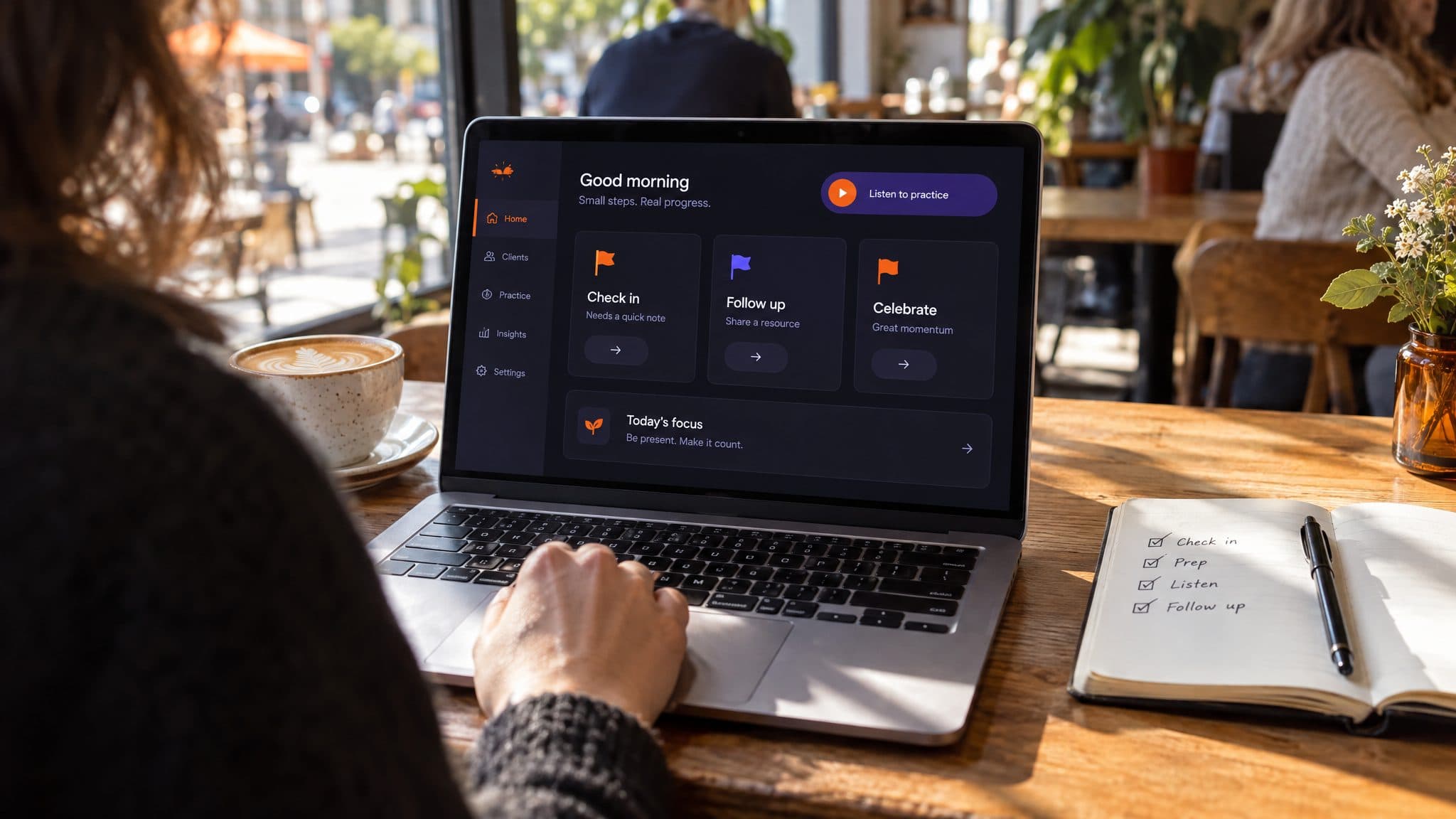
- 01MondayYour client
Finishes chapter 3 on Sunday night. At 8am gets the chapter exercise as a five-minute prompt, with the page number.
YouNothing. The prompts come from your book and you approved them once.
- 02TuesdayYour client
Asks how your framework works with a difficult boss. Gets an answer from chapter 6, with the page cited.
YouNothing. The answer came from your book.
- 03WednesdayYour client
Asks about a topic your book doesn't cover. The companion says so and offers your workshop page instead of guessing.
YouYou see the question in the weekly summary. Three readers asked it, so it goes in your next newsletter.
- 04ThursdayYour client
Downloads a personal plan built from the four exercises they finished so far.
YouNothing.
- 05FridayYour client
Gets one question: "Want help putting this into practice with a group?"
YouYou get the names of readers who said yes, with their answers, before your next cohort opens.
Your book and your talk, as something people use.
We build from the manuscript and the slides you already have. If the rights to the full text are not clear yet, we start from your exercises, frameworks and talks.
- 01
Your book's exercises as short daily prompts, a reader journal and a personal plan
- 02
Practice on your method, with answers only from your book that cite the page. The exercises and journal still work with AI switched off
- 03
A Client Assessment Quiz on your framework for your last slide, your podcast and your book
- 04
Reader and audience emails sent to your email tool, tagged by book, chapter or event
- 05
A clear, single next step into your coaching, course or workshop
- 06
An optional room summary for event organizers, with nobody named
- 07
A privacy and consent page in plain words
- Kit (ConvertKit)
- Mailchimp
- ActiveCampaign
- Kajabi
- GoHighLevel
- Stripe
- Zapier
Your words stay yours.
Putting a book into an AI tool raises fair questions about who owns what. These are the rules we build to.
- Copyright in your bookUS Copyright Office: Copyright and AI, Part 2 (29 Jan 2025)What it means for a script
The US Copyright Office says your own writing stays protected when it shows up in AI output. Text an AI writes on its own, from a prompt alone, generally is not protected.
What the coach doesEvery exercise and prompt is your text, approved by you. The companion points readers to your pages and quotes short passages, instead of rewriting your book in its own words.
- Training on your bookOpenAI Services Agreement, sections 4.1 and 4.2What it means for a script
OpenAI's business terms say it will not use customer content to improve its services unless the customer agrees. Anthropic's commercial terms say it may not train models on customer content.
What the coach doesThe app runs on API accounts in your name, under those business terms. Your manuscript is never pasted into a consumer AI app.
- Who owns what the app writesAnthropic Commercial Terms of ServiceWhat it means for a script
Under OpenAI's agreement the customer owns the output. Anthropic's commercial terms say the same and assign its rights in outputs to the customer.
What the coach doesYou are the customer on those accounts, so the personal plans, summaries and reader data belong to you, not to us.
- Emails to readersFTC: CAN-SPAM Act: A Compliance Guide for BusinessWhat it means for a script
The CAN-SPAM Rule covers the commercial emails that follow a quiz or a companion app: no misleading headers or subject lines, your postal address in every email, and a working opt-out honored within 10 business days.
What the coach doesReaders opt in with a plain consent line. Every email carries an unsubscribe link and your business address, and contacts land in your own email tool.
This is how we build, not legal advice. Your counsel or compliance team signs off on the scripts before launch.
Work this is built on.
“As a founder with a clear product vision but without a software engineering background, I especially appreciated his ability to translate my ideas and detailed specifications into practical, elegant technical solutions.”
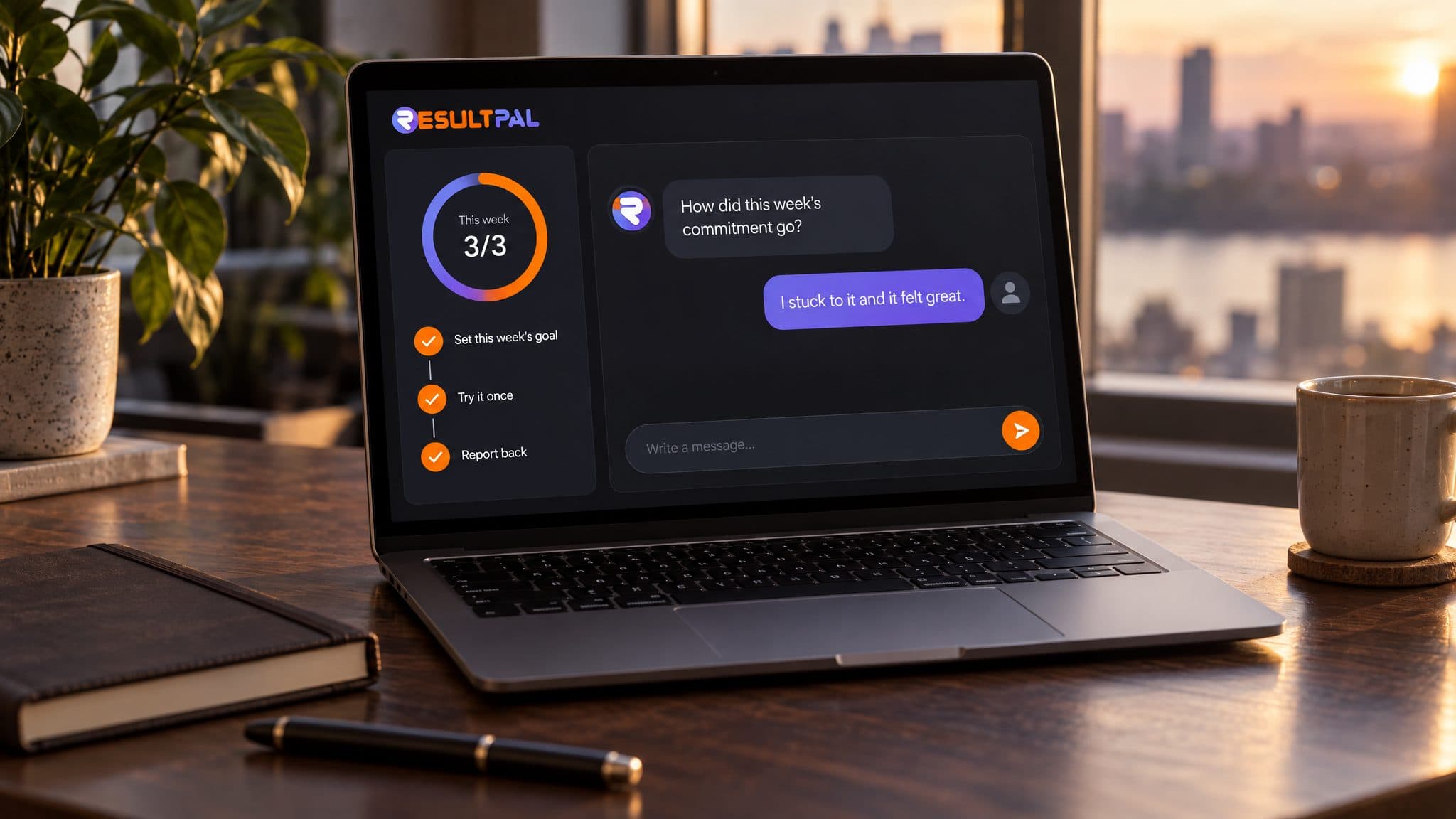 01AI Coach · Training
An AI coach that keeps an author's teaching working after the workshop
We built the full ResultPal platform for author Dr. Pelè. He sells it to organizations. Its AI coach helps people use his teaching. It was in production in about three months.
ResultPal · Dr. Pelè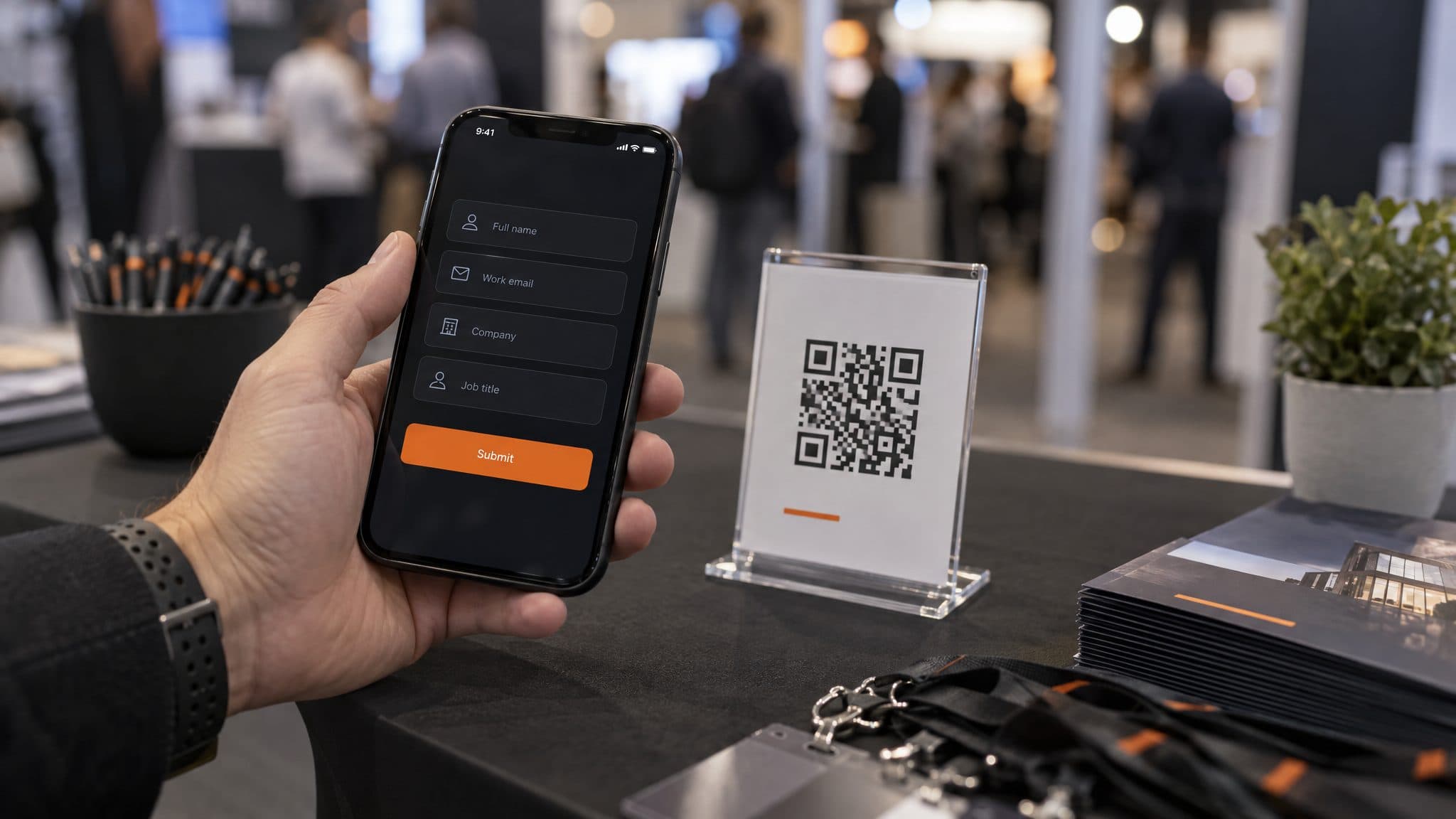 02Lead Capture · Events
A QR code app that emails each event attendee a personal AI plan
A QR code app for events. Attendees fill in a short form and get personal AI picks and a one-page PDF by email. Post-keynote follow-up is built the same way.
Australian SME AI program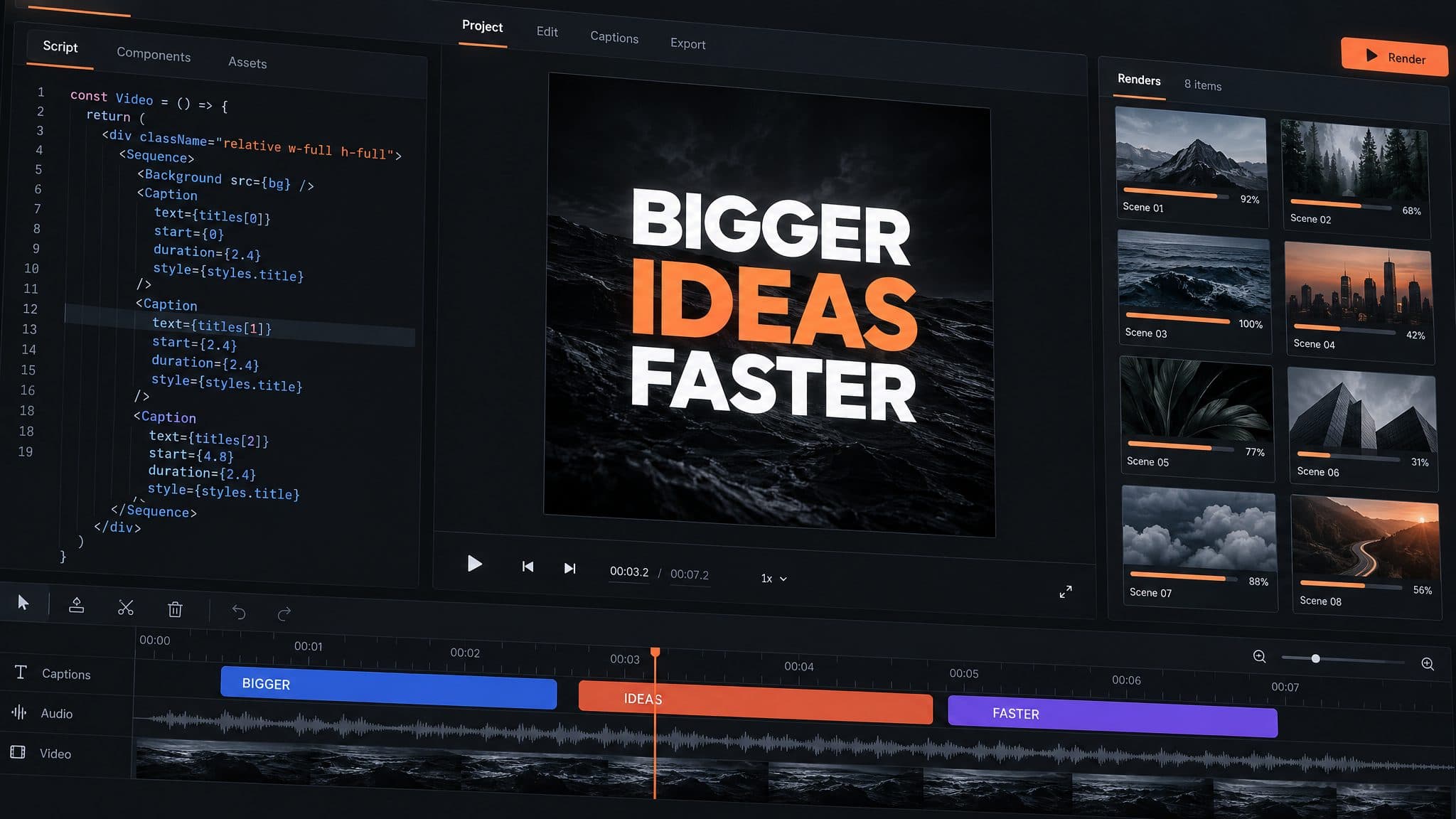 03Video · Content Engine
One founder interview in, eight videos and three written assets out
One recorded founder interview becomes eight videos and three written files, using only the founder's own words. The same care goes into keeping an author's voice intact.
Australian SME AI program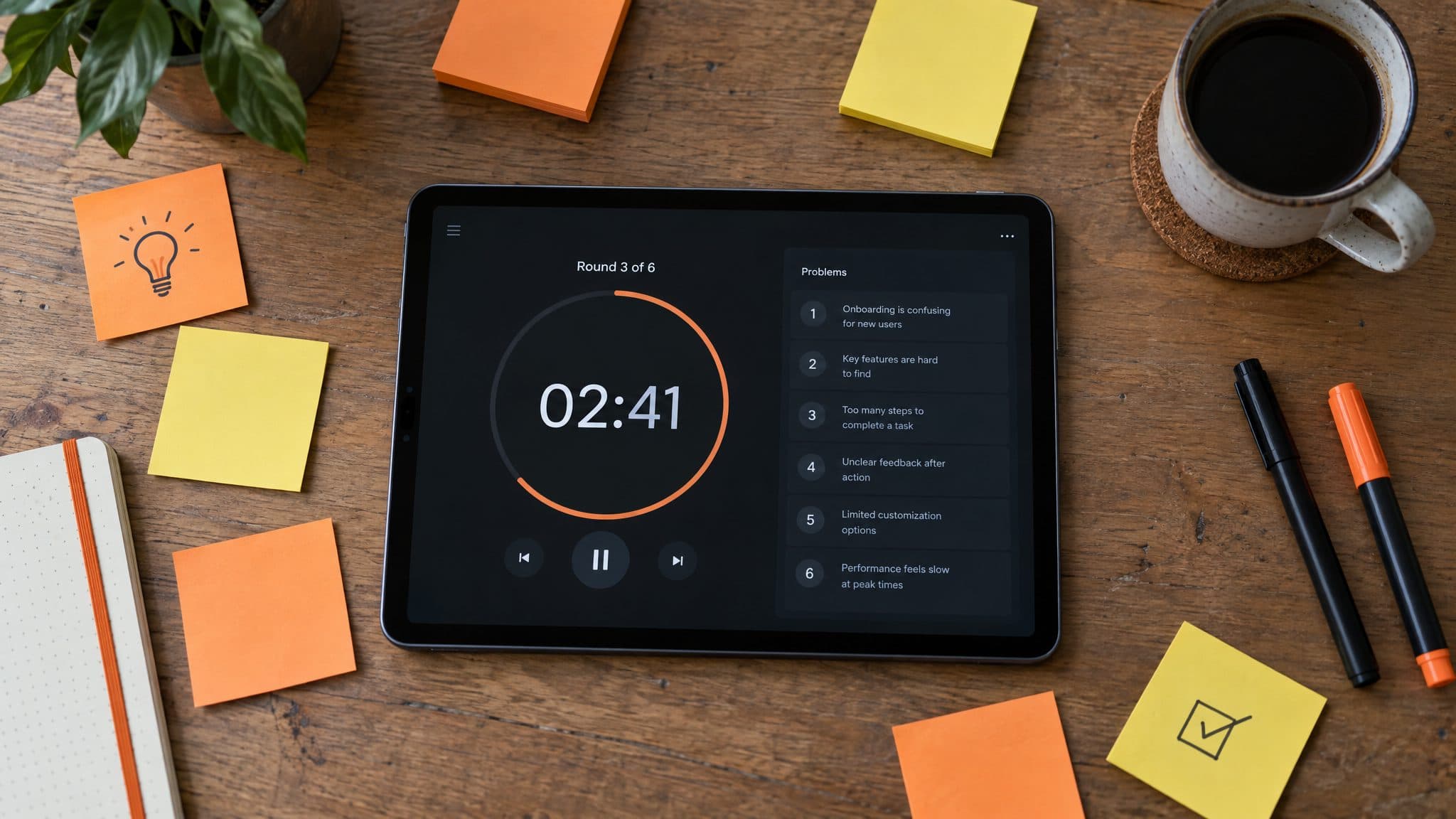 04Workshop Exercise · Five Whys
A timed workshop exercise app where the AI decides when to stop asking why
A timed exercise app where an AI asks up to five follow-up questions on each answer, and every session ends in an emailed analysis built from the person's own words.
Australian SME AI program
What else is on the market.
The tools a coaching business would compare us against, checked on the date shown. Where a vendor publishes nothing, the table says so.
You own the code, the data and every reader email from day one, and the AI accounts run under business terms that keep your book out of model training.
Lines the app will never cross
Each line is a rule in the build, with a test behind it, before the first client signs in.
- 01
Reproduce long passages of your book. It quotes briefly and cites the page.
- 02
Answer as if it were you. It says it is an AI practice companion built on your book.
- 03
Make things up. If the book doesn't cover it, it says so.
- 04
Act as a therapist. It stops, shows the 988 Lifeline and alerts you or your team, straight away.
- 05
Add anyone to your list without a clear opt-in.
- 06
Show a reader's journal to anyone, event organizers included. Room summaries name nobody.
Things authors and speakers ask before they book.
Updated
Will this give my book away for free?
No. The companion quotes short passages and cites the page. It doesn't hand over chapters. If you want, access can be unlocked with a code printed in the book, so only readers who bought it can use the companion.
Amazon already has Ask this Book. Why build my own?
Kindle's Ask this Book answers questions about thousands of bestsellers inside Amazon's app. The Authors Guild has said it isn't licensed and that authors can't opt out. You also never learn who the readers are. A companion you own runs your exercises, in your words, and builds a reader list you can invite to your program.
Do I need my publisher’s permission?
It depends on your contract, so check with your agent or publisher before we build on the full text. Many authors keep the rights to their own exercises, frameworks and talks. We can start with those, and add the full text once the rights are clear. This is not legal advice.
How do readers find it?
Through a QR code and a short link in the back of the book, at the end of each chapter, on your last slide and in your podcast notes. The app captures the email with a clear opt-in and sends it to your email tool.
What do event organizers get?
If you agree to it, a room summary after the talk: how the audience scored on your framework and what they said they would try, with nobody named. It gives you a real answer when an organizer asks what happens after you leave the stage.
Can it use my voice?
It uses a standard AI voice and always says it is an AI. We don't copy your voice. Most companions work well in text, with your own recorded audio where you already have it.
What does it cost?
After a free call and a free audit, you get one fixed quote in writing, on a one-page plan. A quiz for your talks is a small job. A practice companion with your reader list is a bigger one. You pay 50% to start and 50% at launch. Hosting and AI accounts are in your name, so the running cost is the provider’s bill, which grows with use, not headcount.
Who owns the reader list?
You do, along with the code and the data. Reader emails go to your own email tool, and the app runs in accounts in your name. If you stop working with us, it keeps running.
Can you build an assessment quiz that captures leads from my talks?
Yes. The Client Assessment Quiz puts your quiz online, scored on your rules. Each person gets a short report in your words, and their contact goes to your email tool. You get a QR code and link for your slides and podcast, a results dashboard and an optional event mode with live room results. A first version takes about two weeks.

Start with a free call.
Tell us how you coach and where your people get stuck. Then a free audit: we look at your method and the tools you already run, and tell you what we would build first, or whether an off-the-shelf tool already does the job. You get one fixed quote in writing.
Free call · free audit · one fixed quote in writing
- 01Book a free callTell us how you coach and where your people get stuck.
- 02Get a free auditWe look at your method and the tools you already use.
- 03DecideA fixed quote in writing. Nothing to pay if you say no.