Rent seats or own it? What AI role-play costs a real estate coaching company (2026)
Tom Ferry and Glover U already give their members AI role-play on their own scripts. Here are the three ways a coaching company can do the same, what each costs at 300 members, and the Fair Housing and buyer agreement traps to build around.

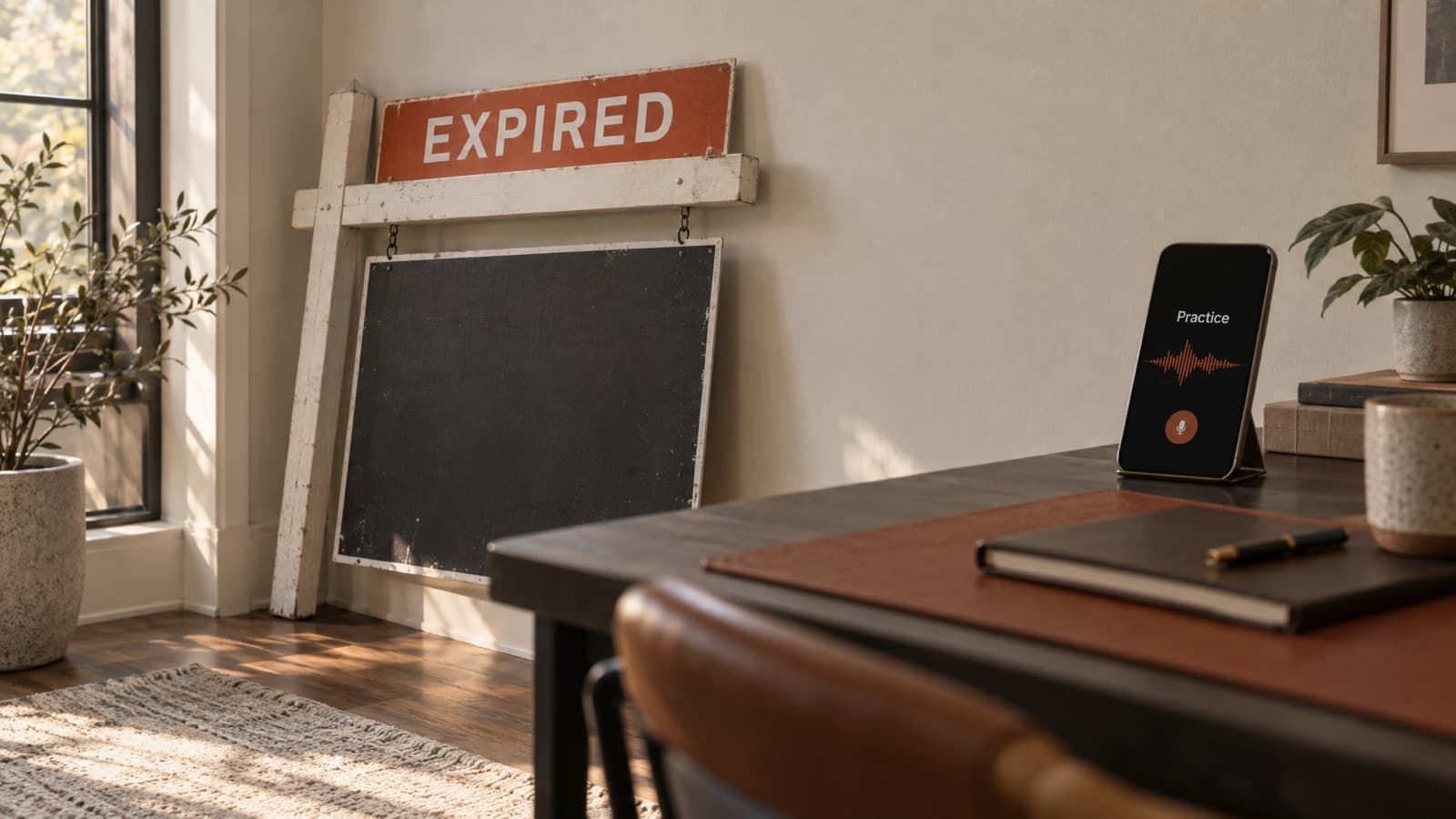
Picture the role-play segment on a group coaching call. Two agents practice the expired script. Forty watch with their cameras off.
That is why AI role-play caught on so fast in real estate coaching. An agent can rehearse the call ten times at 7am against an AI seller who argues back, and get scored before the real dials start.
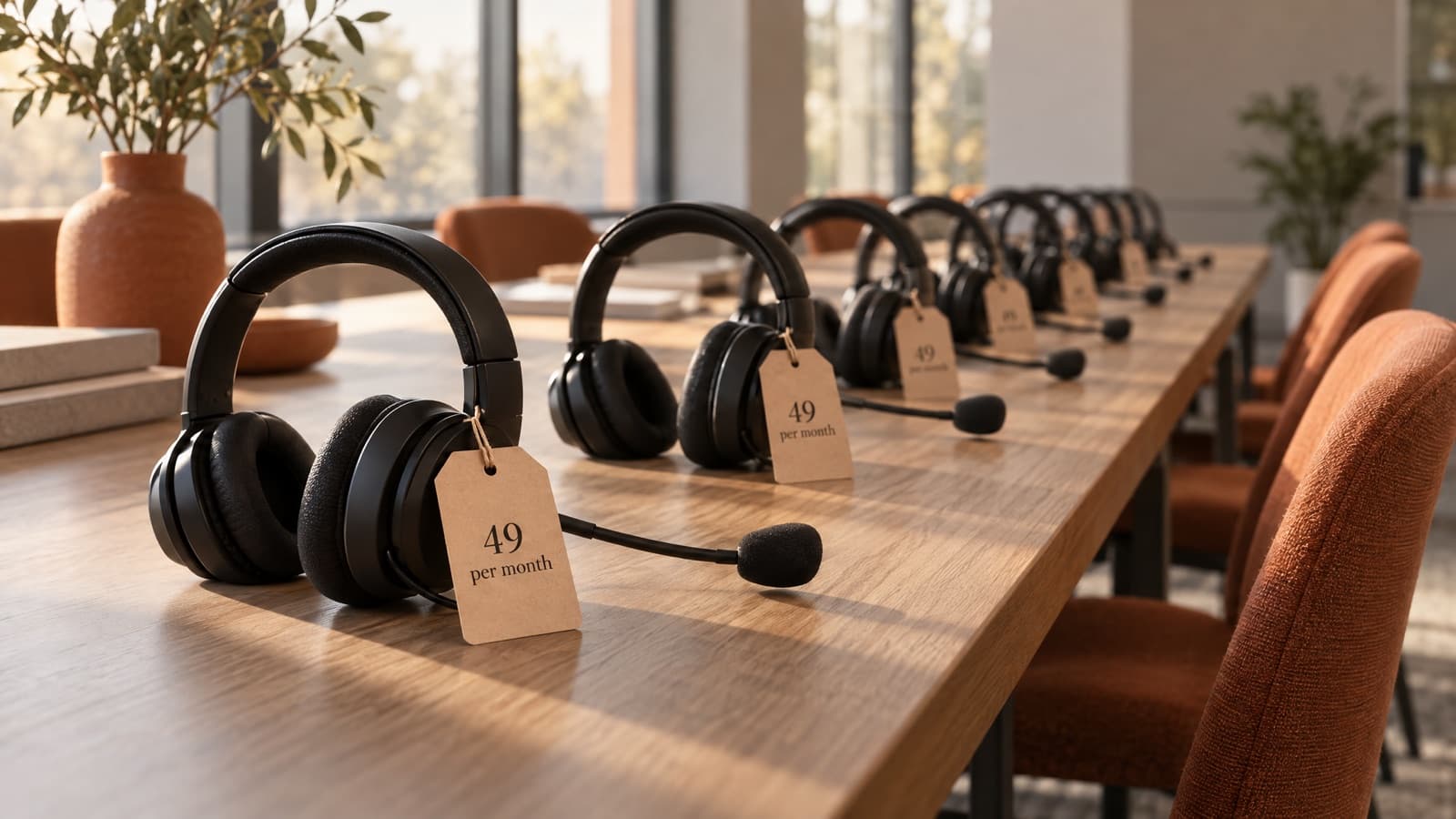
The short answer: a coaching company has three ways to give members AI role-play in 2026. Send them to a per-seat tool such as Shilo at $49 an agent a month. License a platform such as BrokerBot, at $999 a month for up to 250 agents. Or build your own, on your scripts, under your brand.
Two of the best-known names in the business have already chosen. Their choice says a lot about where this is going.
I checked every price here on 25 October 2026. The sources are at the end.
Meet Tessa, our example coaching company
Tessa is a made-up example, like Dana in how much an AI coach costs. She runs a real estate coaching company with 300 agents. She has call scripts she has refined for years, and a scorecard her coaches use on live role-plays.
Her members pay her every month. Her coaches keep re-teaching the same scripts. And since August 2024 she has a new script to teach that every agent finds awkward.
The buyer agreement made practice urgent
The NAR settlement practice changes took effect on 17 August 2024. Since then, agents who use an MLS need a written agreement with a buyer before touring a home. That includes live virtual tours.
The agreement has to state the agent’s compensation, or how it is set, in objective terms. It has to say the fee is fully negotiable and not set by law. Offers of compensation are gone from the MLS.
So every agent now has a conversation to get right before the first showing. Plenty of buyers hear “sign this” as “pay me”. Agents get better at that talk the way they got better at expireds. They say it out loud, many times, to someone who pushes back.
The big coaching companies built their own
Here is the choice I mentioned. Tom Ferry started with TomAI, a chatbot for coaching clients, in 2023. Its successor, Revii AI, launched to the public on 11 February 2025 with scored push-to-talk role-plays, and coaching members get a premium version.
Glover U launched Glover U AI on 23 June 2026. It covers role-play, script practice, objection handling and listing appointment prep, on Glover U’s own scripts, running on BrokerBot’s technology.
Neither sent members to a generic tool.
Both put AI practice under their own name, on their own scripts. That is the bar your members will compare you against. And neither publishes a price, because it is part of what members already pay for.
Three ways to give your members AI role-play
The first way is renting seats. Members use a tool such as Shilo, SalesGo or Hyperbound, which come with general real estate scenarios. It is fast and cheap per agent. The catch is that the scripts are mostly theirs, and the bill grows with every member.
The second way is licensing a platform that learns your documents, which is what Glover U did with BrokerBot. Pricing is flat in tiers, so it stays predictable up to a point. Above 250 agents, BrokerBot quotes it per client.
The third way is a custom build. Someone builds the role-play on your scripts and your scorecard, with your login and your dashboard, in accounts you own. You pay once to build it, and then the provider bills AI usage to your own account.
The prices, checked 25 October 2026
- Shilo’s Solo plan is $49 an agent a month, billed every 3 months, with role-play and call scoring. Team pricing is quote-only.
- SalesGo is $49 a month or $399 a year, with FSBO, expired and cold call role-play.
- BrokerBot is $99 a month solo, $499 for 2 to 10 agents, $999 for 11 to 250 agents, and custom above that. Annual billing gives two months free.
- Hyperbound has a free tier with 45 prebuilt role-plays. Paid seats are priced per user and not published.
- CloseDaily is a real estate CRM with daily FSBO and expired lead lists, from $0 to $399 a month. Its pricing page lists no AI practice feature; an AI assistant is marked coming soon.
- Revii AI and Glover U AI don’t publish prices.
Tessa’s numbers at 300 members
Seat prices look tiny until you multiply. Here is what each option costs Tessa in a year, at list price, with no discounts.
- Shilo for every member is 300 x $49 x 12 = $176,400 a year. A team quote could be lower, and Shilo doesn’t publish one.
- SalesGo’s annual plan for every member is 300 x $399 = $119,700 a year.
- BrokerBot’s Brokerage tier is $999 a month, or $11,988 a year, but it stops at 250 agents. Tessa has 300, so she would need a custom quote.
- A custom voice build is a fixed quote after a free audit, plus AI usage billed by the provider to your own account. I budget $2 to $4 per active member a month for voice, so about $7,200 to $14,400 a year if all 300 practice.
The usage number only counts members who actually practice. Members who never log in cost Tessa nothing. A seat costs the same either way.
Rehearse the five calls agents dread
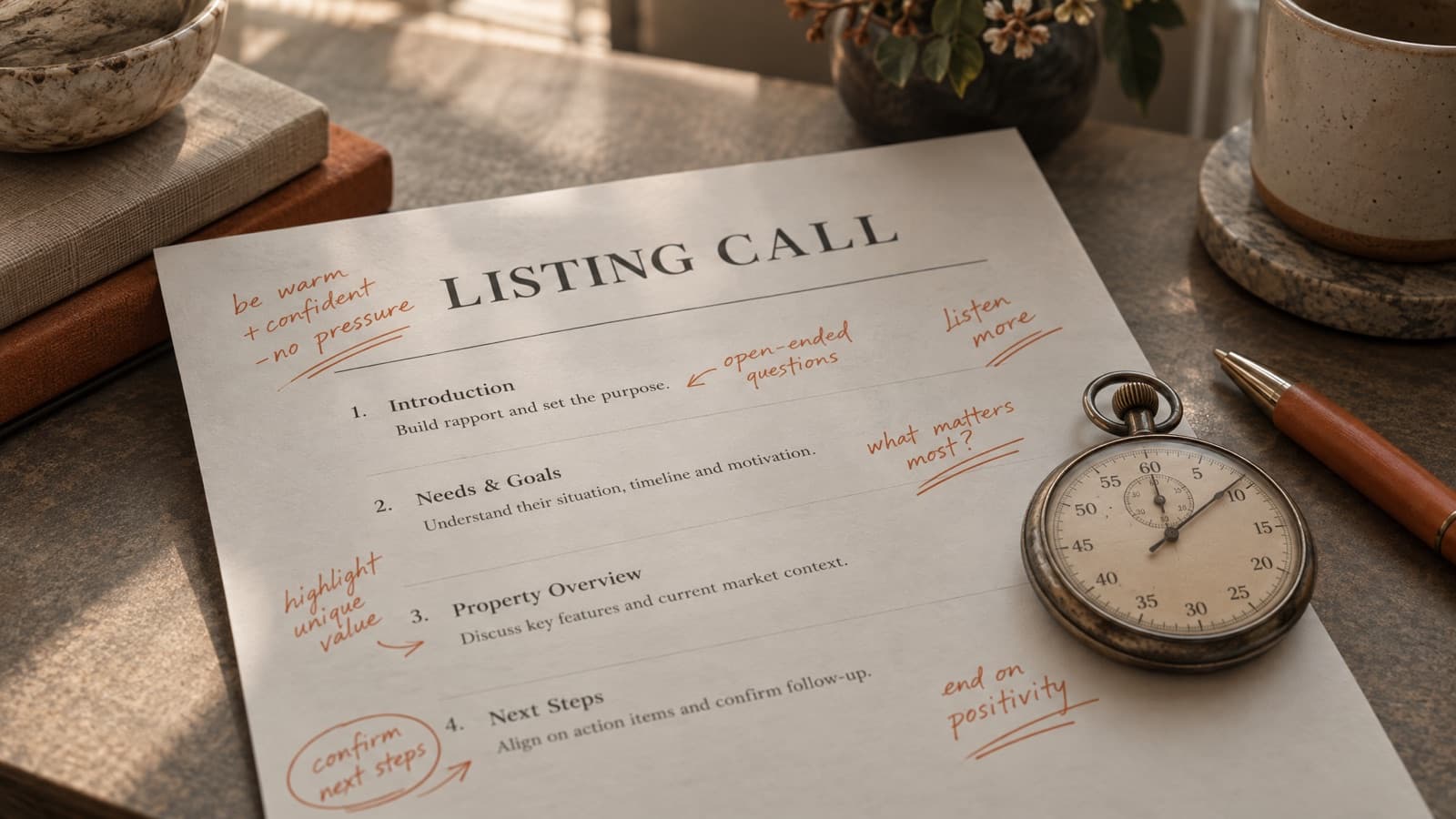
Most coaching script books cover the same ground: FSBOs, expireds, circle prospecting, past clients, listing presentations and objections. For AI role-play, I would start with five, because those are the calls where a freeze costs a listing.
- The expired listing call, where the owner says they are taking a break, relisting with the same agent, or waiting for rates to drop.
- The FSBO call, where the seller does not want to pay a commission, and your script turns the talk to their net.
- The buyer agreement conversation, where the agent has to explain the agreement and say the fee is negotiable and not set by law.
- The listing presentation, where a friend will do it for less and the seller asks for a cut.
- The price reduction talk after thirty quiet days.
A good scorecard checks behavior, not keywords. Did the agent acknowledge before answering? Did they ask for the appointment out loud? Most agents lose points on that last one.
Three compliance traps to build around
Fair Housing is the first. Steering includes discouraging a buyer from a neighborhood, or telling them they would not be comfortable with the people who live there. The NAR Code of Ethics also bars Realtors from volunteering a neighborhood’s racial, religious or ethnic makeup.
A role-play buyer should ask the tempting questions, such as whether an area is right for “a family like mine”. The scorecard should flag any answer that describes an area by who lives there.
Do Not Call is the second. Numbers on the National Do Not Call Registry are off limits for listing calls, and calling hours run from 8am to 9pm local time. Many FSBO and expired owners are on the registry.
So your AI should be a practice partner. It should never dial a real number.
Recording is the third. Federal law needs one party’s consent, but states such as California, Florida, Illinois, Pennsylvania and Washington need everyone on the call to agree. Record practice calls only after the agent agrees on screen.
When a per-seat tool is the better buy
If you run a brokerage under 250 agents and general scripts are fine, BrokerBot’s flat tiers will likely cost less than a build. If a single agent wants practice on their own, SalesGo or Shilo costs a couple of dollars a day.
A build pays off for a coaching company like Tessa’s. She has her own scripts and enough members that seat fees hurt. She also wants something she can sell as a member tier, the way the big names already do.
How we build it
We build AI role-play on your own scripts: your objection handlers and your scorecard. A first version takes about 2 weeks, and voice builds launch in 4 to 6. Every build gets a fixed quote after a free audit, and the provider bills AI usage to your own account. We build the same for loan officer coaching companies, with RESPA checks.
We built the full ResultPal platform for author Dr. Pelè. He sells it to organizations. Its AI coach helps people use his teaching. It was in production in about three months.
The scenarios, rubric checks and compliance rules we use are on our page for real estate coaching companies. If you want Tessa’s numbers with your member count, the discovery call is free, and so is the audit after it. The wider picture, for every kind of coaching business, is on our AI practice coach page.
Sources
- NAR, what the settlement means for buyers and sellers: https://www.nar.realtor/the-facts/what-the-nar-settlement-means-for-home-buyers-and-sellers
- Newswire, Tom Ferry’s Revii AI: https://www.newswire.com/news/tom-ferry-s-revii-ai-the-future-of-real-estate-productivity-22518262
- HousingWire, Tom Ferry launches TomAI: https://www.housingwire.com/articles/tom-ferry-launches-ai-coaching-chatbot-tomai/
- National Law Review, Glover U launches Glover U AI: https://natlawreview.com/press-releases/glover-u-launches-glover-u-ai-bringing-real-estate-coaching-ai-era
- Shilo pricing: https://shilo.ai/pricing
- SalesGo: https://www.salesgo.ai/
- BrokerBot pricing: https://brokerbot.ai/pricing
- Hyperbound pricing: https://www.hyperbound.ai/pricing
- CloseDaily pricing: https://closedaily.com/pricing/
- Mike Ferry real estate scripts book: https://mikeferry.com/product/mike-ferrys-real-estate-scripts-book-pdf-download
- Follow Up Boss, expired listing scripts: https://www.followupboss.com/blog/expired-listing-scripts
- 24 CFR 100.70, steering: https://www.law.cornell.edu/cfr/text/24/100.70
- NAR Code of Ethics and Standards of Practice: https://www.nar.realtor/about-nar/governing-documents/code-of-ethics/2026-code-of-ethics-standards-of-practice
- 47 CFR 64.1200, TCPA and Do Not Call: https://www.law.cornell.edu/cfr/text/47/64.1200
- RCFP, recording consent guide: https://www.rcfp.org/introduction-to-reporters-recording-guide/